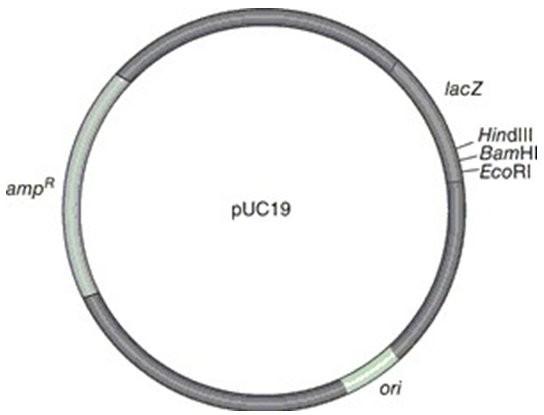
How Many Pieces of Ecori Produce From the Plasmid Shown in Figure 91 Easy Notecards
1
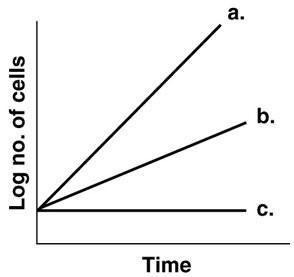
Figure 6.1, which line best depicts a facultative anaerobe in the absence of O2?
2
In Figure 6.1,which line best depicts an obligate anaerobe in the presence of O2?
3
In Figure 6.1, which line shows the growth of an obligate aerobe incubated anaerobically?
4
In Figure 6.1, which line best illustrates the growth of a facultative anaerobe incubated aerobically?
5
In Figure 6.1, which line best depicts a psychrotroph incubated at 0°C?
6
If cells are grown in media containing amino acids labeled with radioactive nitrogen (15N), most of the radioactivity will be found in the cells'
7
Which of the following elements is NOT correctly matched with its cellular function?
E)phosphorus — used for production of carbohydrates.
8
Pathogenic bacteria isolated from the respiratory or intestinal tracts of humans are
B) capnophiles that grow best in carbon dioxide incubators.
9
The biosafety level (BSL) for most introductory microbiology laboratories is
10
The biosafety level (BSL) for a clinical microbiology laboratory working with potentially airborne pathogens, such as tuberculosis bacteria, is
11
A sample of milk is tested for its bacterial content in a plate count assay. A one-milliliter sample of the milk is diluted in a 1:10 dilution series. One milliliter of the third dilution tube is plated in a pour plate. After incubation, the plate has 54 colonies, indicating that the original milk sample contained
D) 54,000 cells per milliliter.
12
The addition of which of the following to a culture medium will neutralize acids?
13
Salts and sugars work to preserve foods by creating a
D) hypertonic environment.
14
The term aerotolerant anaerobe refers to an organism that
A) does not use oxygen but tolerates it.
15
Which of the following is an advantage of the standard plate count?
B) determines the number of viable cells
16
Which of the following is an advantage of the direct microscopic count?
C) requires no incubation time
17
Most bacteria reproduce by
18
Thirty-six colonies grew in nutrient agar from 1.0 ml of undiluted sample in a standard plate count. How many cells were in the original sample?
19
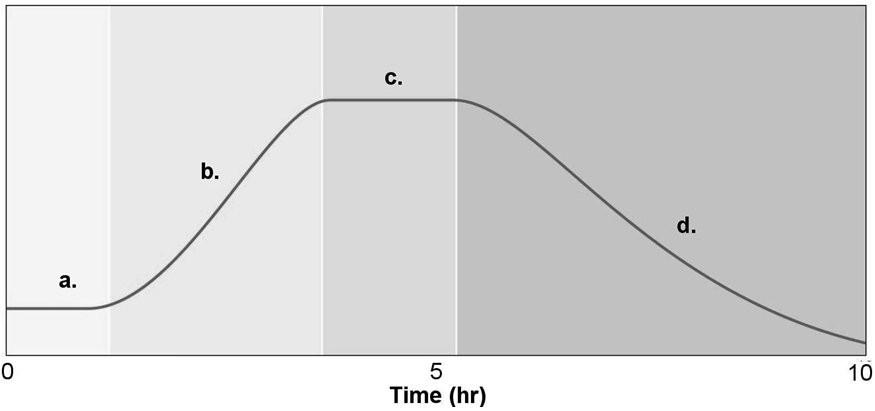
Figure 6.2 shows a typical bacterial growth curve with the y-axis indicating the log of the number of bacteria and the x-axis indicating time in culture. In the figure, which section (or sections) shows a growth phase where the number of cells dying equals the number of cells dividing?
20
Figure 6.2 shows a typical bacterial growth curve with the y-axis indicating the log of the number of bacteria and the x-axis indicating time in culture. In the figure, which sections of the graph illustrate a logarithmic change in cell numbers?
21
Most bacteria grow best at pH
22
Most fungi grow best at pH
23
Consider a culture medium on which only gram-positive organisms such as Staphylococcus aureus colonies can grow due to an elevated NaCl level. A yellow halo surrounds the growth, indicating the bacterium fermented a sugar in the medium, decreasing the pH as a result and changing the color of a pH indicator chemical. This type of medium would be referred to as a(n)
D) selective and differential medium.
24
A culture medium consisting of agar, peptone, and beef heart is a
25
Which of the following pairs of microbe classification terms and optimal growth temperatures is mismatched?
B) thermophile — growth at 37°C
26
During which growth phase will gram-positive bacteria be most susceptible to penicillin?
27
Which of the following is the best definition of generation time?
B) the length of time needed for a cell to divide
28
Which of the following is NOT a direct method to measure microbial growth?
29
Which group of microorganisms is most likely to spoil a freshwater trout preserved with salt?
B) facultative halophiles
30
Which of the following is an organic growth factor?
31
Which of the following is an example of a metabolic activity that could be used to measure microbial growth?
32
An experiment began with 4 cells and ended with 128 cells. How many generations did the cells go through?
33
Three cells with generation times of 60 minutes are inoculated into a culture medium. How many cells are there after 5 hours?
34
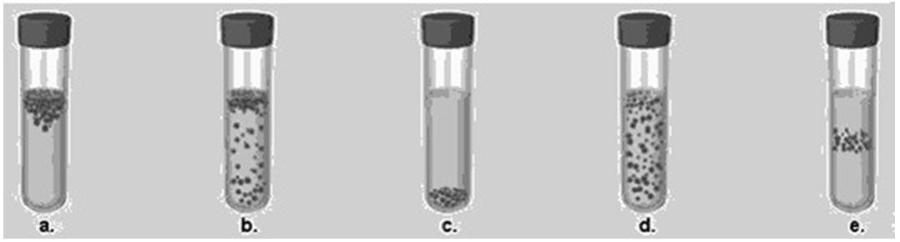
In Figure 6.3, which tube shows the expected growth pattern for a microaerophile?
35
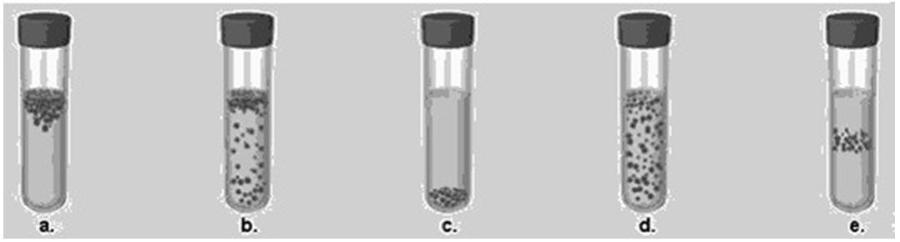
In Figure 6.3, which tube shows the expected growth pattern for a facultative anaerobe?
36
In one hospital, Pseudomonas aeruginosa serotype 10 infected the biliary tract of 10 percent of 1300 patients who underwent gastrointestinal endoscopic procedures. After each use, endoscopes were washed with an automatic reprocessor that flushed detergent and glutaraldehyde through the endoscopes, followed by a tap water rinse. P. aeruginosa serotype 10 was not isolated from the detergent, glutaraldehyde, or tap water. What was the source of the infections?
B) a biofilm in the reprocessor
37
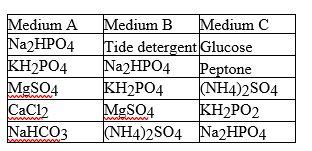
For the three types of media in Table 6.1, which medium (or media) is/are chemically defined?
38

In Table, 6.1, in which medium (or media) would an autotroph grow?
39
Assume you inoculated 100 cells, with a generation time of 20 minutes, into 100 ml of nutrient broth. You then inoculated 100 cells of the same species into 200 ml of nutrient broth. After incubation for 4 hours, you can reasonably expect to have
C) the same number of cells in both.
40
The source of nutrients in nutrient agar is
C) peptone and beef extract.
41
Which enzyme catalyzes the reaction: O2- + O2- + 2H+ → H2O2 + O2?
42
Which enzyme catalyzes the reaction: 2H2O2 → 2H2O + O2?
43
Which enzyme catalyzes the reaction: H2O2 + 2H+ → 2H2O?
44
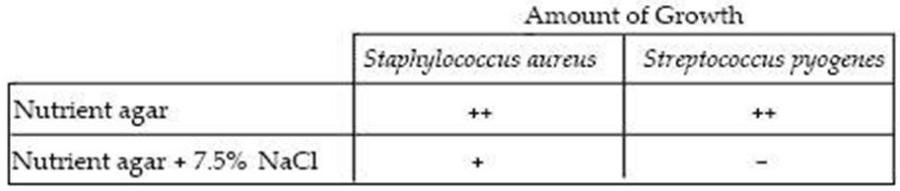
The data in Table 6.2 indicate that S. aureus is a(n)
C) facultative halophile.
45
Patients with indwelling catheters (long-term tubes inserted into body orifices for drainage, such as through the urethra and into the urinary bladder) are susceptible to infections because
D) biofilms develop on catheters.
46
An isolated colony on a streak plate contains millions (or even billions) of identical cells all arising from one initial cell.
47
Bacterial growth refers to an increase in the numbers of cells in a bacterial culture.
48
Pure cultures can easily be obtained on streak plates, even if the desired bacteria are present in very low concentrations in the initial culture broth.
49
Agar is used as a solidifying agent in microbiological media since few bacteria can degrade it.
50
Laboratory cultivation of obligate anaerobes requires reducing media or special growth chambers filled with inert gases.
51
Filtration methods, followed by growth of the bacteria trapped on the filters in growth media, are used to count bacteria present in very low concentrations, such as in lakes and streams.
52
Nitrogen-fixing bacteria, such as cyanobacteria, can use atmospheric nitrogen (N2) for their nitrogen source.
53
Most pathogenic bacteria are thermophiles.
54
In performing a ten-fold dilutions series from a sample containing 10,000 bacteria per milliliter, the fourth tube in the dilution series will have 10 cells per milliliter.
55
Turbidity is an indirect measurement of bacterial growth that can be measured using a spectrophotometer.
56
Which of the following is the best method to sterilize heat-labile solutions?
57
Which of the following best describes the pattern of microbial death?
A) The cells in a population die at a constant rate.
58
Which of the following chemical agents is used for sterilization?
59
Which of the following substances is used for surgical hand scrubs?
60
Which of the following pairs of terms is mismatched?
A) bacteriostatic — kills vegetative bacterial cells
61
The antimicrobial activity of chlorine is due to which of the following?
A) the formation of hypochlorous acid
62
Which of the following regarding antimicrobial control agents is FALSE?
E) Alcohols effectively inactivate nonenveloped viruses by attacking lipids.
63
Which of the following does NOT achieve sterilization?
64
Which of the following is a limitation of the autoclave?
D) It cannot be used with heat-labile materials.
65
An agent used to reduce the number of bacteria on a toilet would most accurately be called a(n)
66
Application of heat to living cells can result in all of the following EXCEPT
D) decreased thermal death time.
67
Which of the following disinfectants acts by disrupting the plasma membrane?
68
Oxidizing agents include all of the following EXCEPT
69
Disinfection of water is achieved by all of the following EXCEPT
70
All of the following substances are effective against nonenveloped viruses EXCEPT
71
Which of the following methods is used to preserve food by slowing the metabolic processes of foodborne microbes?
72
Which concentration of ethanol is the most effective bactericide?
73
All of the following factors contribute to hospital-acquired infections EXCEPT
E) None of the answers is correct; all of these factors may contribute to hospital-acquired infection.
74
Which of the following treatments is the most effective for controlling microbial growth?
D) They are equivalent treatments.
75
Which of the following could be used to sterilize plastic Petri plates in a plastic wrapper?
76
Which of the following regarding antimicrobial control agents is FALSE?
E) A true antimicrobial control agent is equally effective against both bacteria and viruses.
77
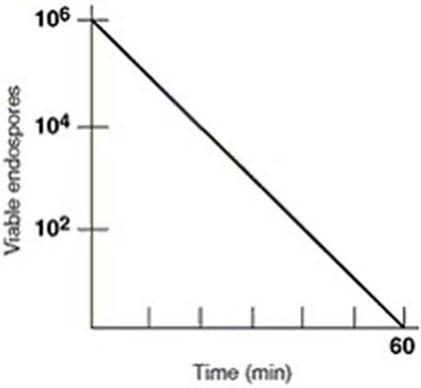
A suspension of 106 Bacillus cereus endospores was put in a hot-air oven at 170°C. Plate counts were used to determine the number of endospores surviving at the time intervals shown.
22) In Figure 7.1, what is the thermal death time?
78
In Figure 7.1, the thermal death point for this culture is
E) The answer cannot be determined based on the information provided
79
In Figure 7.1, the decimal reduction time (D value) for the culture, which is defined as the time to reduce a population by one log, is approximately
80
Which of the following results in lethal damage to nucleic acids?
E) heat, radiation, and some chemicals
81
Which of the following pairs is mismatched?
B) alcohols — open wounds
82
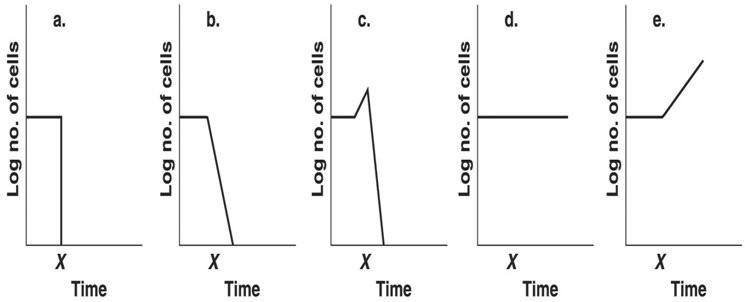
Which graph in Figure 7.2 best depicts the effect of placing the culture in an autoclave for 15 minutes at time x?
83
Which graph in Figure 7.2 best depicts the effect of placing the culture at 7°C at time x?
84
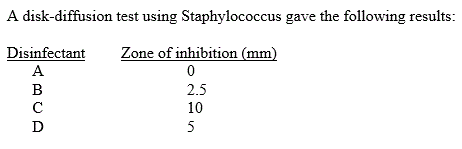
In Table 7.1, which compound was the most effective against Staphylococcus?
85
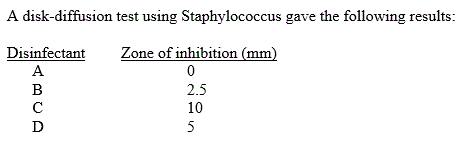
In Table 7.1, which compound was the most effective against E. coli?
E) The answer cannot be determined based on the information provided.
86
In Table 7.1, which compound was bactericidal?
E) The answer cannot be determined based on the information provided.
87
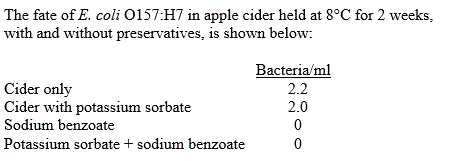
In Table 7.2, which preservative is most effective?
E) iodine mixed with a surfactant.
D) is a sterilizing agent.
90
All of the following substances are used to preserve foods EXCEPT
91
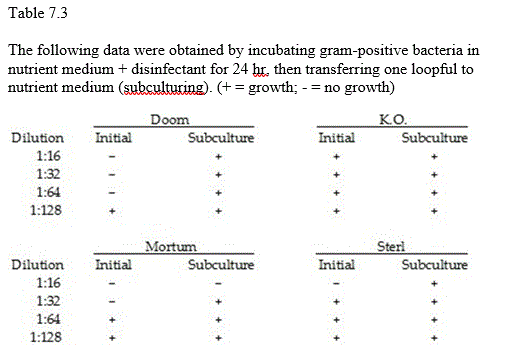
In Table 7.3, which disinfectant is the most effective at stopping bacterial growth?
92
In Table 7.3, which disinfectant was bactericidal?
93
In Table 7.3, which disinfectant was most effective against Salmonella?
E) The answer cannot be determined based on the information provided.
94
All of the following are effective for destroying prions EXCEPT
95
Which of the following pairs is mismatched?
E) ultraviolet radiation — desiccation
96
All of the following are methods of food preservation EXCEPT
97
The preservation of beef jerky from microbial growth relies on which method of microbial control?
98
If you were preparing nutrient agar at home and did not have an autoclave, what could you use to sterilize the nutrient agar?
E) pressure cooker at 121°C for 15 minutes
99
Bone and tendons for transplant are decontaminated by
100
Which one of the following is most resistant to chemical biocides?
A) gram-negative bacteria
101
The following is true of quarternary ammonium compounds EXCEPT
C) they are effective when combined with soaps.
102
Any process that destroys the non-spore forming contaminants on inanimate objects is sterilization.
103
Desiccation is a reliable form of sterilization.
104
The thermal death time is the time needed to kill all the bacteria in a particular culture at a certain temperature.
105
Pseudomonas has been found growing in quaternary ammonium compounds (quats).
106
Moist heat destroys organisms by denaturing proteins.
107
Some antimicrobial chemicals are considered to be disinfectants and antiseptics.
108
The pH of the medium has no effect on the activity of the disinfectant being applied.
109
Ultraviolet light (UV) causes irreversible breaks in DNA strands.
110
Autoclaving is the most effective method of moist heat sterilization.
111
Microorganisms placed in high concentrations of salts and sugars undergo lysis.
112
A gene is best defined as
C) a sequence of nucleotides in DNA that codes for a functional product.
113
Which of the following pairs is mismatched?
B) RNA polymerase — makes a molecule of RNA from an RNA template
114
Which of the following statements is FALSE?
D) DNA replication proceeds in only one direction around the bacterial chromosome.
C) two strands of nucleotides running in an antiparallel configuration.
116
Which of the following is NOT a product of transcription?
117
Which of the following statements about bacteriocins is FALSE?
B) They cause food-poisoning symptoms.
118
In Figure 8.1, which colonies are streptomycin-resistant and leucine-requiring?
119
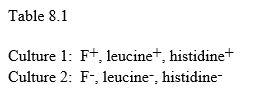
In Table 8.1, what will be the result of conjugation between cultures 1 and 2 (reminder: F+ has a different meaning than Hfr)?
A) 1 will remain the same;
2 will become F+, leucine-, histidine-
120
In Table 8.1, if culture 1 mutates to Hfr, what will be the result of conjugation between the two cultures?
C) 1 will remain the same;
recombination will occur in 2
121
An enzyme produced in response to the presence of a substrate is called a(n)
122
Transformation is the transfer of DNA from a donor to a recipient cell
B) as naked DNA in solution.
123
Genetic change in bacteria can be brought about by
E) All of the answers are correct.
124
Which of the following statements regarding a bacterium that is R+ is FALSE?
125
The initial effect of ionizing radiation on a cell is that it causes
D) the formation of highly reactive ions.
126
According to the operon model, for the synthesis of an inducible enzyme to occur, the
C) substrate must bind to the repressor.
127
Synthesis of a repressible enzyme is stopped by the
D) corepressor-repressor complex binding to the operator.
128
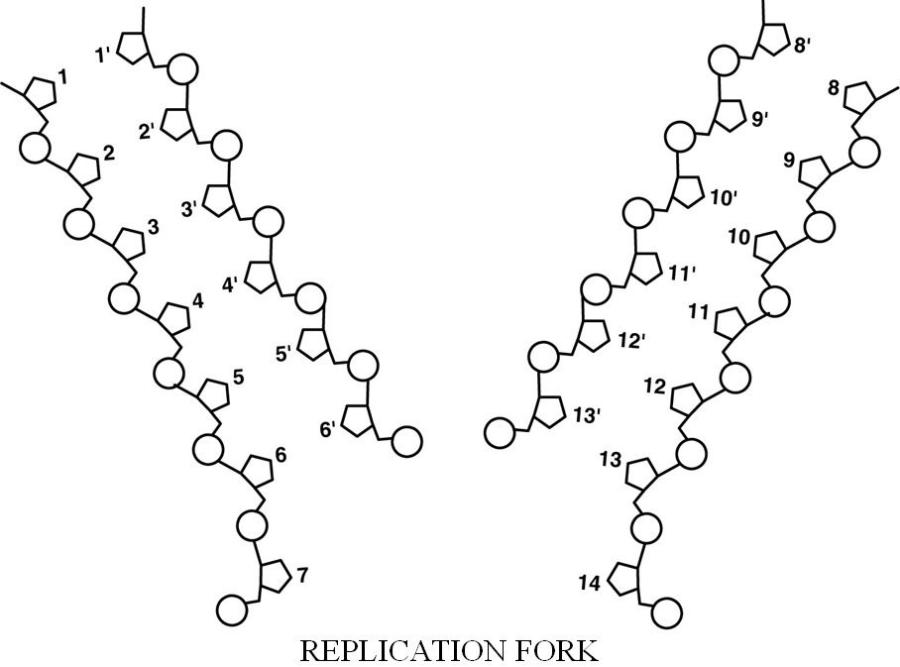
In Figure 8.2, if base 4 is thymine, what is base 4'?
129
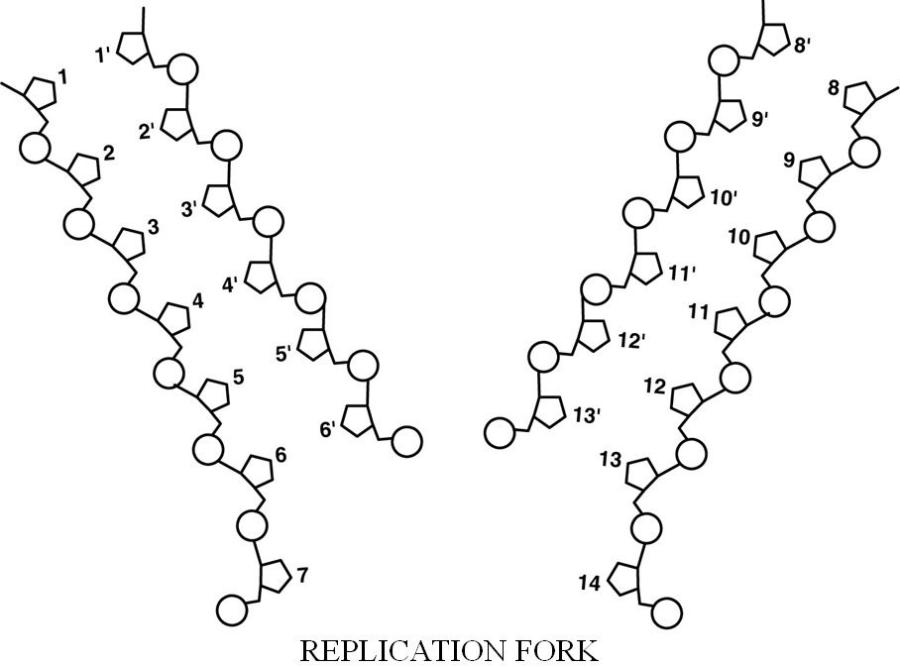
In Figure 8.2, if base 4 is thymine, what is base 11' (remember the complimentary configuration of bases in DNA)?
130
In Figure 8.2, base 2 (and ONLY the base) is covalently bound/attached to
131
The damage caused by ultraviolet radiation is
132
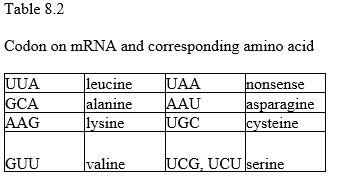
Refer to Table 8.2. If the sequence of amino acids encoded by a strand of DNA is
serine-alanine-lysine-leucine, what is the order of bases in the sense strand of DNA?
133
Refer to Table 8.2. If the sequence of amino acids encoded by a strand of DNA is
serine-alanine-lysine-leucine, the coding for the antisense strand of DNA is
134
Refer to Table 8.2 The anticodon for valine is
135
Refer to Table 8.2. What is the sequence of amino acids encoded by the following sequence of bases in a strand of DNA (pay attention to the polarity of the DNA here)?
3' ATTACGCTTTGC
D) Translation would stop at the first codon.
136
Refer to Table 8.2. If an indeterminate frameshift mutation occurred in the sequence of bases shown below, what would be the sequence of amino acids coded for?
3' ATTACGCTTTGC
E) The answer cannot be determined based on the information provided.
137
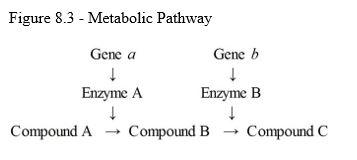
In Figure 8.3, if compound C reacts with the allosteric site of enzyme A, this would exemplify
138

In Figure 8.3, if enzyme A is a repressible enzyme, compound C would
C) bind to the corepressor for Gene a.
139
In Figure 8.3, if enzyme A is an inducible enzyme,
B) compound A would bind to the repressor for Gene a.
140
Conjugation differs from reproduction because conjugation
C) transfers DNA horizontally, to nearby cells without those cells undergoing replication.
141
The necessary ingredients for DNA synthesis can be mixed together in a test tube. The DNA polymerase is from Thermus aquaticus, and the template is from a human cell. The DNA synthesized would be most similar to
142
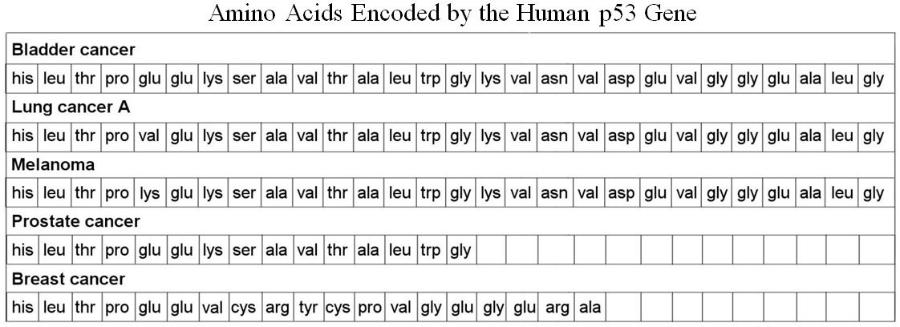
Based on the information in Table 8.3, prostate cancer is probably the result of which kind of mutation?
143
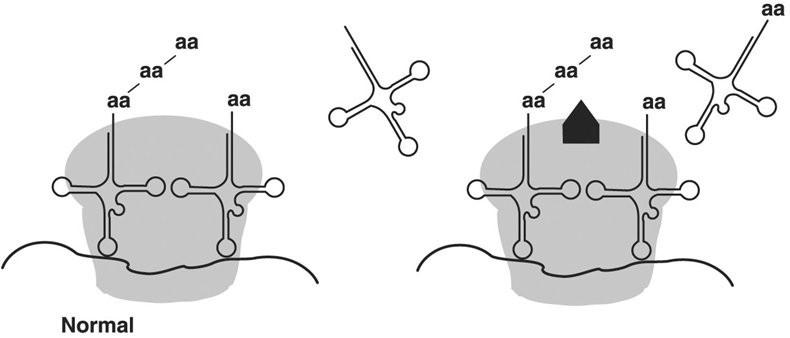
In Figure 8.4, the antibiotic chloramphenicol binds the 50S large subunit of a ribosome as shown (the light gray area is the large subunit, while the black shape is the drug). From this information you can conclude that chloramphenicol
D) prevents translation in prokaryotes.
144
The mechanism by which the presence of glucose inhibits the lac operon is
A) catabolite repression.
145
If you knew the sequence of nucleotides within a gene, which one of the following could you determine with the most accuracy?
A) the primary structure of the protein
146
An enzyme that makes covalent bonds between the sugar of one nucleotide and the phosphate groups in another nucleotide in DNA is
147
An enzyme that copies DNA to make a molecule of RNA is
148
An enzyme that catalyzes the cutting and resealing of DNA, and is translated from insertion sequences, is
149
Repair of damaged DNA, in some instances and mechanisms, might be viewed as a race between an endonuclease and
150
The cancer gene ras produces mRNA containing an extra exon that includes a number of UAA codons. Cancer cells produce ras mRNA missing this exon. This mistake most likely is due to a mistake by
151
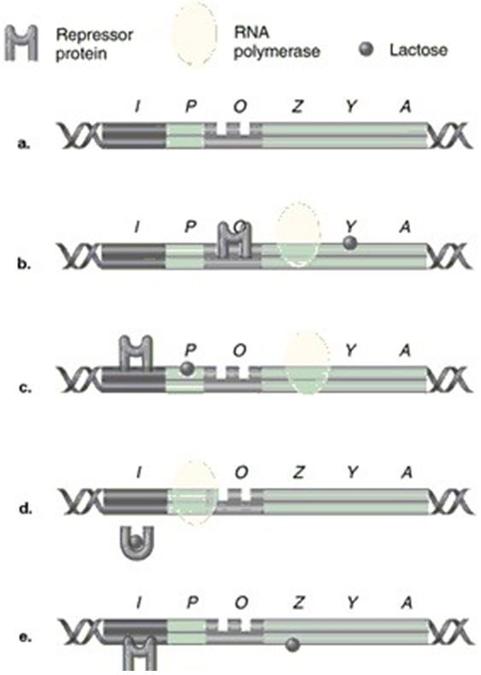
In Figure 8.5, which model of the lac operon correctly shows RNA polymerase, lactose, and repressor protein when the structural genes are being transcribed?
D) allow different cells to produce different proteins.
153
Assume the two E.coli strains shown below are allowed to conjugate.
Hfr: pro+, arg+, his+, lys+, met+, ampicillin-sensitive
F-: pro-, arg-, his-, lys-, met-, ampicillin-resistant
What supplements would you add to glucose minimal salts agar to select for a recombinant cell that is lys+, arg+, amp-resistant?
C) ampicillin, proline, histidine, methionine
154
Protein synthesis in eukaryotes is similar to the process in prokaryotes in that both eukaryotes and prokaryotes
E) use codons to determine polypeptide sequences.
155
Recombination will always alter a cell's genotype.
156
Open-reading frames are segments of DNA in which both start and stop codons are found.
157
Bacteria typically contain multiple chromosomes.
158
Mutations that are harmful to cells occur more frequently than those that benefit cells.
159
The miRNAs in a cell inhibit protein synthesis by forming complementary bonds with rRNA.
160
Some cells may contain multiple genomes.
161
Both base substitution and frameshift mutations can result in the formation of premature stop codons.
162
In the Ames test, any colonies that form on the control should be the result of spontaneous mutations.
163
Transposition (insertion of a transposon into a DNA sequence) results in the formation of base substitution mutations in a cell's DNA.
164
Cell-to-cell contact is required for transduction to occur.
165
The following are steps used to make DNA fingerprints. What is the third step?
B) Digest with a restriction enzyme.
166
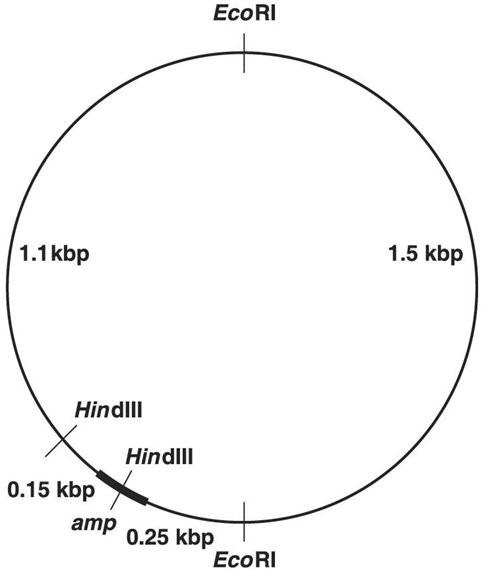
How many pieces will EcoRI produce from the plasmid shown in Figure 9.1?
167
In Figure 9.1, after digestion with the appropriate restriction enzyme, what is the smallest piece containing the entire ampicillin-resistance (amp) gene?
168
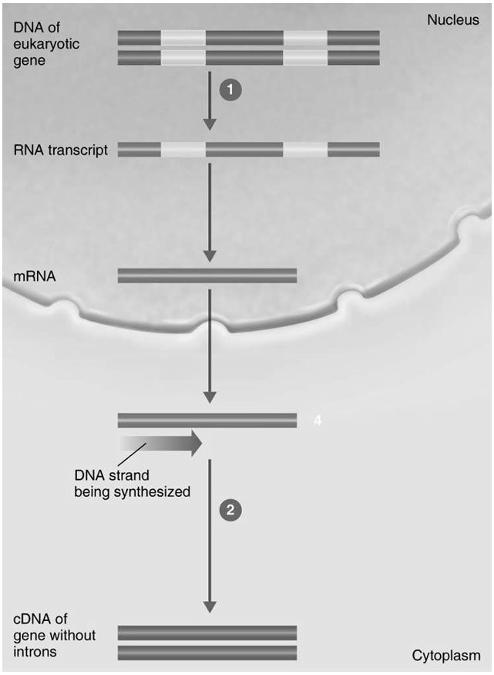
In Figure 9.2, the enzyme in step 1 is
169
In Figure 9.2, the enzyme in step 2 is
170
The reaction catalyzed by reverse transcriptase is
171
Which of the following is an advantage of using E. coli to make a human gene product?
C) Its genes are well known.
172
Which of the following is NOT an agricultural product made by DNA techniques?
173
If you have inserted a gene in the Ti plasmid, the next step in genetic engineering is
D) inserting the Ti plasmid into Agrobacterium.
174
Biotechnology involves the
E) use of microorganisms to make desired products, the use of animal cells to make vaccines, and the development of disease-resistant crop plants.
175
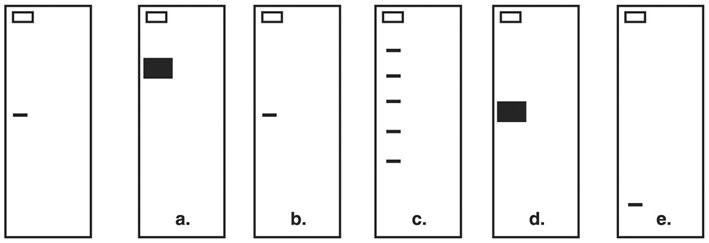
The figure at the left in Figure 9.3 shows a gene identified by Southern blotting. What will a Southern blot of the same gene look like after PCR?
176
Which of the following is NOT a desired characteristic of DNA vectors used in gene cloning procedures?
177
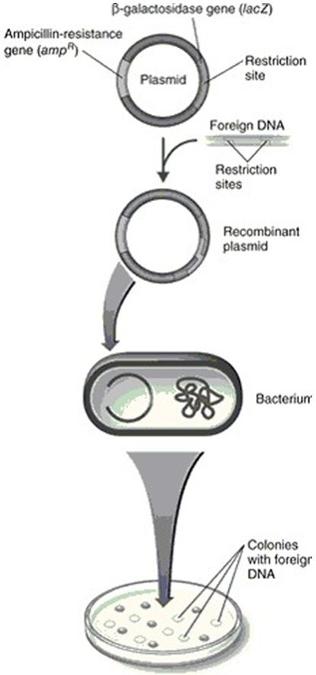
In Figure 9.4, the bacteria transformed with the recombinant plasmid and plated on media containing ampicillin and X-gal will
C) form white, ampicillin-resistant colonies.
178
An advantage of synthetic DNA over genomic or cDNA is the ability to
A) insert desired restriction sites into the DNA sequence.
179
An advantage of cDNA over genomic DNA is that it
180
The restriction enzyme EcoRI recognizes the sequence G↓AATTC. Which of the following is TRUE of DNA after it is treated with EcoRI?
A) All of the DNA fragments will have single-stranded regions ending in AA.
181
Which enzyme would cut this strand of DNA?
GCATGGATCCCAATGC
A) Enzyme Recognition
BamHI G↓GATCC
CCCTAG↑G
182
Pieces of DNA stored in yeast cells are called a
183
A population of cells carrying a desired plasmid is called a
184
Self-replicating DNA used to transmit a gene from one organism to another is a
185
The Human Genome Project, which was completed in 2003, was focused on
B) determining the nucleotide sequence of the entire human genome.
186
A colleague has used computer modeling to design an improved enzyme. To produce this enzyme, the next step is to
C) determine the nucleotide sequence for the improved enzyme.
187
You have a small gene that you wish replicated by PCR. After 3 replication cycles, how many double-stranded DNA molecules do you have?
188
Which of the following places the steps in the PCR procedure in the correct order?
1) Incubate at 94°C to denature DNA strands;
2) Incubate at 72°C for DNA synthesis;
3) Incubate at 60°C for primer hybridization.
189
Which of the following are used to silence specific genes and hold promise for treating cancer or viral diseases, such as hepatitis B?
A) RNA interference (RNAi)
190
Which of the following techniques is NOT used to introduce recombinant DNA into plants?
191
In Figure 9.5, the marker genes used for selecting recombinant DNA are
192
In Figure 9.5, the gene that allows the plasmid to be self-replicating is
193
Which of the following methods would be used to introduce the plasmid shown in Figure 9.5 into E. coli?
194
A source of heat-stable DNA polymerase is
195
Gene silencing involves all of the following EXCEPT
C) small interfering RNA binding to a gene promoter.
196
You want to determine whether a person has a certain mutant gene. The process involves using a primer and a heat-stable DNA polymerase. This process is
197
Which of the following are used by the Centers for Disease Control and Prevention to track outbreaks of foodborne disease?
E) DNA fingerprints, restriction fragment length polymorphisms, and reverse-transcriptase PCR(rtPCR)
198
Assume you have discovered a cell that produces a lipase that works in cold water for a laundry additive. You can increase the efficiency of this enzyme by changing one amino acid. This is done by
B) site-directed mutagenesis.
199
The use of an antibiotic-resistance gene on a plasmid used in genetic engineering makes
B) direct selection possible.
200
The following steps must be performed to make a bacterium produce human protein X.
1-Translation
2-Restriction enzyme
3-Prokaryotic transcription
4-DNA ligase
5-Transformation
6-Eukaryotic transcription
7-Reverse transcription
Which of the following places the steps in the correct order?
201
The use of "suicide" genes in genetically modified organisms is designed to
A) prevent the growth of the modified organisms in the environment.
202
A restriction fragment is
203
In the Southern blot technique, which of the following is NOT required?
E) addition of heat-stable DNA polymerase to amplify DNA
204
The Pap test for cervical cancer involves microscopic examination of cervical cells for cancerous cells. A new, rapid diagnostic test to detect human papilloma virus (HPV) DNA before cancer develops is done without microscopic exam. The steps involved in this FastHPV test are listed below. What is the second step?
A) Add an RNA probe for HPV DNA.
205
Which of the following processes is NOT involved in making cDNA?
206
PCR can be used to identify an unknown bacterium because
A) the RNA primer is specific.
207
The random shotgun method is used in
208
Restriction enzymes are
B) bacterial enzymes that destroy phage DNA.
209
The study of genetic material taken directly from the environment is
210
The term biotechnology refers exclusively to the use of genetically engineered organisms for the production of desired products.
211
In recombinant DNA technology, a vector is a self-replicating segment of DNA, such as a plasmid or viral genome.
212
The practice of breeding plants and animals for desirable traits, such as high crop yield, is called natural selection.
213
A shuttle vector is a plasmid that is used to move pieces of DNA among organisms, such as bacterial, fungal, and plant cells.
214
Nearly all cells, including E. coli and yeast, naturally take up DNA from their surroundings without chemical treatment.
215
The disadvantage of genomic libraries over cDNA libraries is that genomic libraries contain gene introns.
216
One of the first commercial successes of recombinant DNA technology was the production of human insulin using genetically engineered E. coli.
217
Bioinformatics is the use of computer technology to compare and analyze genome sequence.
218
The Ti plasmid isolated from Agrobacterium can be used to insert DNA into any type of plant.
219
The Bt toxin derived from Bacillus thuringiensis has been introduced into some crop plants to make them resistant to insect destruction.
bucknerwerefurser.blogspot.com
Source: https://www.easynotecards.com/notecard_set/89513
0 Response to "How Many Pieces of Ecori Produce From the Plasmid Shown in Figure 91 Easy Notecards"
Post a Comment